

We’ve been early adopters and strong advocates of the WordPress Block Editor (a.k.a. Gutenberg) since its experimental beginnings. From contributing to early community efforts to building open-source tools and plugins that align closely with WordPress core, our team has been deeply invested in the evolution of the Block Editor ecosystem. This experience naturally led to us—and many of our clients—Migrated to WordPress Block Editor Full Site Editing as a future-proof solution for modern site building
Over the years, we’ve helped many clients unlock the power of the Block Editor and Full Site Editing (FSE), whether by building new websites, revamping outdated ones, or migrating legacy setups. Ironically, despite being so invested in Gutenberg, our website told a different story.
The Classic Builder Dilemma
Like many builders, we fell into the trap of not building for ourselves. While we were busy delivering cutting-edge solutions for others, our website remained powered by a classic theme and WPBakery. The design felt dated, the content stale, and making even minor changes became a chore.
We always intended to update it. Our design team worked on new concepts. Marketing explored positioning and messaging. Content was being drafted and revised. But with client work and business priorities always taking the front seat, our website revamp kept getting pushed to the back burner.
Why We Needed the Shift
We weren’t just itching for a redesign, we needed the flexibility and power of the Block Editor for our workflows:
- To easily manage content, layout, and design without developer bottlenecks
- To maintain a cohesive, brand-aligned design system across pages
- To globally manage templates and components visually
- To empower our design and marketing teams to take ownership of content and layout
Finally, We Took the Leap
We decided it was time to treat ourselves like a client. Instead of going for a full-blown overhaul all at once—which we knew would lead to further delays—we chose an incremental, phase-based approach.
✅ Phase 1: Rebranding with the existing WPBakery setup
We started by updating our current site to reflect our new branding. This gave us a much-needed visual refresh without heavy development work.
🚀 Phase 2: Migrating to Full Site Editing (FSE)
We rebuilt the site on a custom block theme to leverage the power of Full Site Editing and modern Block Editor workflows.
🧹 Phase 2.1: Post-migration polish
This phase involved addressing the low-hanging issues, refining the user experience, and improving performance and SEO.
🛠 Phase 3.0: Ongoing incremental redesign and content overhaul (In Progress)
We’re currently in the process of refining key pages, updating content, and experimenting with new design patterns. It’s still a work in progress—but it’s live, and it’s already making a difference.
Revamping with Block Editor FSE
While Visual Composer has served us well in the past, WordPress has changed a lot. The new Block Editor (Block Editor) with Full Site Editing offers a more modern, flexible, and future-proof way to build websites.
A Better Editing Experience
The block editor is more visual and user-friendly. It allows us to design and update pages without switching between the page view (front end) and the editor interface (back end), making the process simpler, cleaner, and more time-efficient.
Reusable Layouts with Patterns
We use block patterns to create reusable sections like featured blocks or call-to-actions, which help maintain consistency and speed up the building process. We use template parts—not block patterns—for structural components like headers and footers. Template parts are reusable across multiple templates, making it easy to manage and update these key sections consistently throughout the site using the block editor.
Global Styles & Control
With FSE, we can define site-wide settings—like fonts, colours, spacing, and responsive font sizes right from the editor. It gives us better control over the design without needing custom code or extra theme options.
Fewer Plugins, Faster Site
Switching to FSE allowed us to eliminate several unnecessary plugins, resulting in a lighter, faster site with fewer maintenance needs.
Using Our Tools
We have been building a custom Block Editor Solution for various needs. Since then, we have actively used it on our site and multiple client projects. This hands-on use has battle-tested and reduced our dependency on third-party plugins.
Results
Lightning-Fast Load Times
From the moment we made the switch, the difference was immediately apparent. With the streamlined infrastructure of Full Site Editing in place, our site loads faster, feels smoother, and responds seamlessly across all devices. Not only has this improved the user experience, but it has also given our SEO scores a significant boost.
Mobile
Visual Composer

Block Editor

Desktop
Visual Composer

Block Editor

Editor Experience
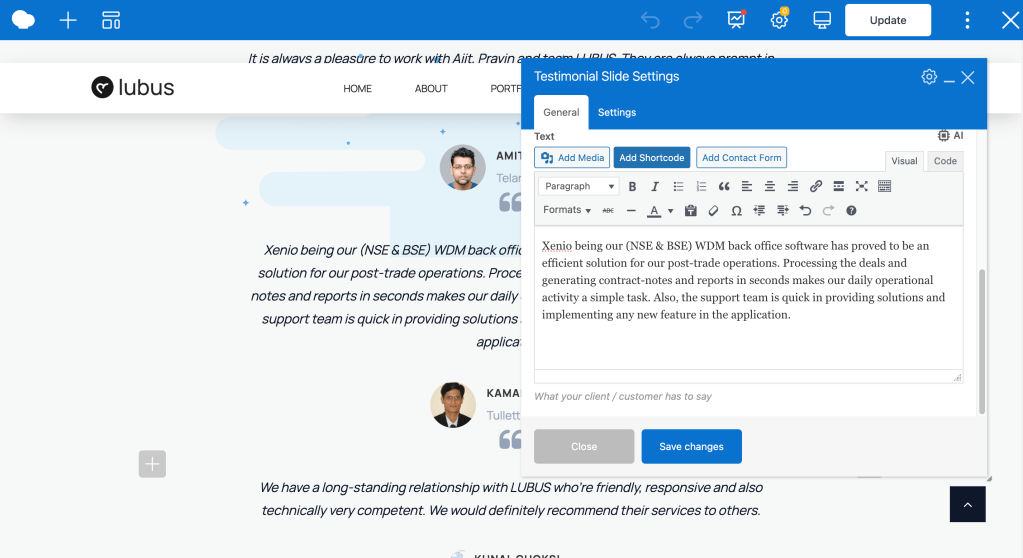

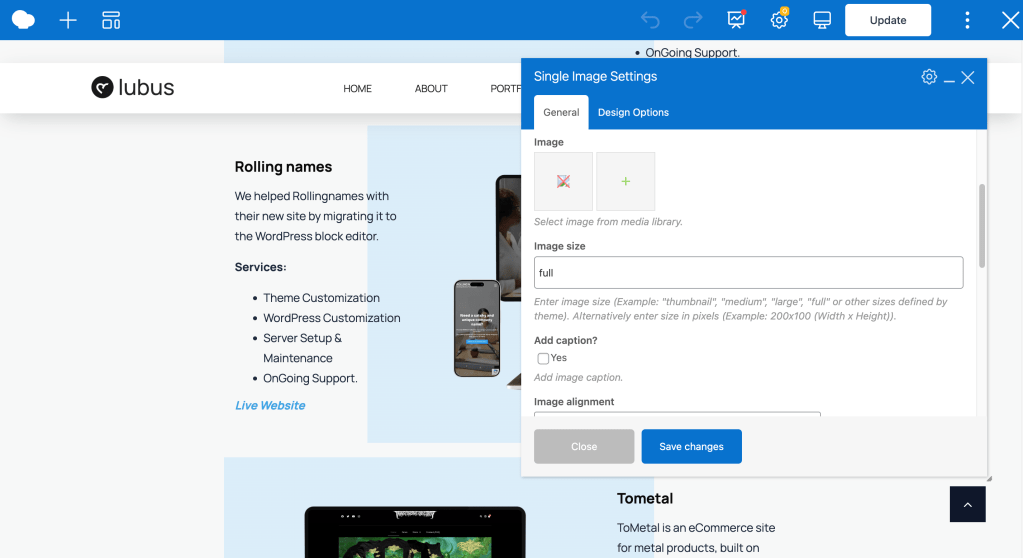
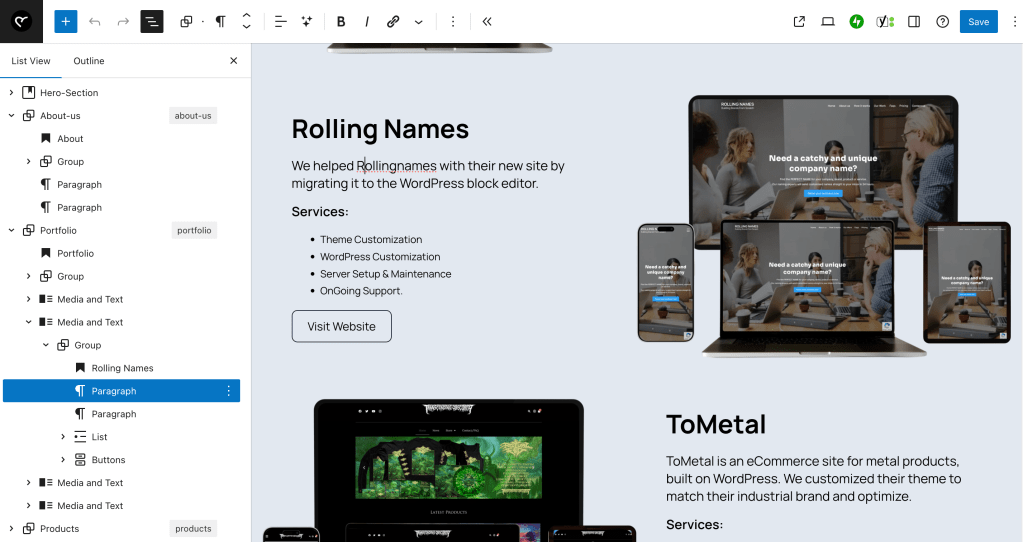
The shift to the Block Editor completely transformed our content management. Unlike the previous method, where the layout often felt disjointed, FSE offers a true WYSIWYG experience. Now, what we see during editing is exactly what appears on the front end—no more guesswork and no more misalignment. Content creators can build and edit confidently, all without relying on developers for every change.
This move from Visual Composer to FSE was not about right or wrong—it was about choosing what works best for us today and in the future.
Visual Composer helped us move quickly when we needed it. But now, FSE offers a smoother, faster, and more scalable experience for us and our clients.
What Changed for Us ?
Since Migrated to WordPress Block Editor Full Site Editing, we’ve:
- Regained editorial and design agility
- Established a consistent and scalable design system
- Improved performance, accessibility, and SEO
- Enabled non-developers to manage content and layouts more confidently
What’s Next ?
We’re actively working through Phase 3.0, and new updates are on the way—both in design and content. This journey has not only helped us overcome decision paralysis but also brought our site in line with the very tools and philosophies we champion. We’ll be sharing more learnings, challenges, and wins in the coming weeks.
Stay tuned. The best is yet to come.

Leave a Reply