
Our Focus for the Year Ahead
As we look back at 2025, one thing stands out clearly: it was a year of focus and foundation. We leaned heavily into the WordPress block editor, embraced open-sourcing the tools and code that power our projects, and adopted automation as a core part of how we build and deliver. These efforts helped us work faster, smarter, and with greater consistency while staying true to our belief in open and accessible technology.
Building on this momentum, 2026 will be about going deeper and wider. We will continue helping businesses elevate their digital experiences using the block editor, while steadily releasing more Free and Open Source Software (FOSS) for the community.
This year, we’re also doubling down on publishing FOSS emerging from our Laravel and Filament work, and leveraging Frappe to help businesses streamline and optimize their core processes. Alongside this, AI and automation will play a bigger role in accelerating onboarding, handling repetitive and pattern-based tasks, and freeing up human creativity for work that truly matters.
The goal remains simple: build powerful, open, and scalable solutions that help businesses grow efficiently and sustainably.
Building a Better Way to Plan and Publish Social Content
As part of our broader push to streamline internal workflows through automation, we took a step back to ask a simple question: where does context get lost, and time get wasted? One consistent answer came from our digital marketing team: planning and posting across channels required juggling multiple tools with limited integration and control.
We built Socialytics to solve that.
Instead of adapting our workflow to off-the-shelf tools, we wanted an integrated system we could own, extend, and evolve alongside our needs. What started as a small proof of concept has quickly grown into an internal tool purpose-built for our marketing workflows.
Today, Socialytics brings campaign planning, post scheduling, and media management into a single flow. Teams can plan content, track campaign notes, and review performance without switching platforms. We’re also actively working on a WordPress integration. Since blogs, case studies, and monthly updates are central to how we communicate, our goal is to let published content naturally feed into social planning. With this context in place, AI can assist in drafting post descriptions, reducing repetitive work and allowing the team to focus on distribution, storytelling, and impact.
This is a small but meaningful step toward a larger goal: using automation and AI to remove friction, so people can focus on what matters most.
Building a Media Library Plugin for FilamentPHP
As we continue building internal tools and client projects, a familiar challenge keeps surfacing in different forms: managing media consistently across applications.
Most projects need the same fundamentals: a central place for images and files, an easy way to reuse existing assets, and workflows that don’t involve uploading the same media repeatedly. Yet teams often end up solving this problem again and again, either by adding custom logic or working around tools that try to cover too many use cases at once.
We explored existing solutions and found many of them to be powerful, but designed for very broad requirements. That power often came with added complexity that didn’t align with how we work. What we needed was simpler: a flexible, lightweight media library that fits naturally into a FilamentPHP application.
That need led us to start building a Media Library plugin for Filament, shaped directly by real usage across multiple projects. The goal is to intentionally make media management simple, predictable, and easy to reuse.
The plugin provides a central media store along with a reusable media picker field, enabling teams to select existing assets instead of creating duplicates. It’s a small change on the surface, but one that removes repeated friction from content-heavy workflows.
The plugin is already in active internal use and continues to evolve. As it stabilizes, we plan to release it as an open-source package extending our ongoing effort to share practical Filament tools built from real project needs.
Laying the UI Foundations for Gymie Mobile
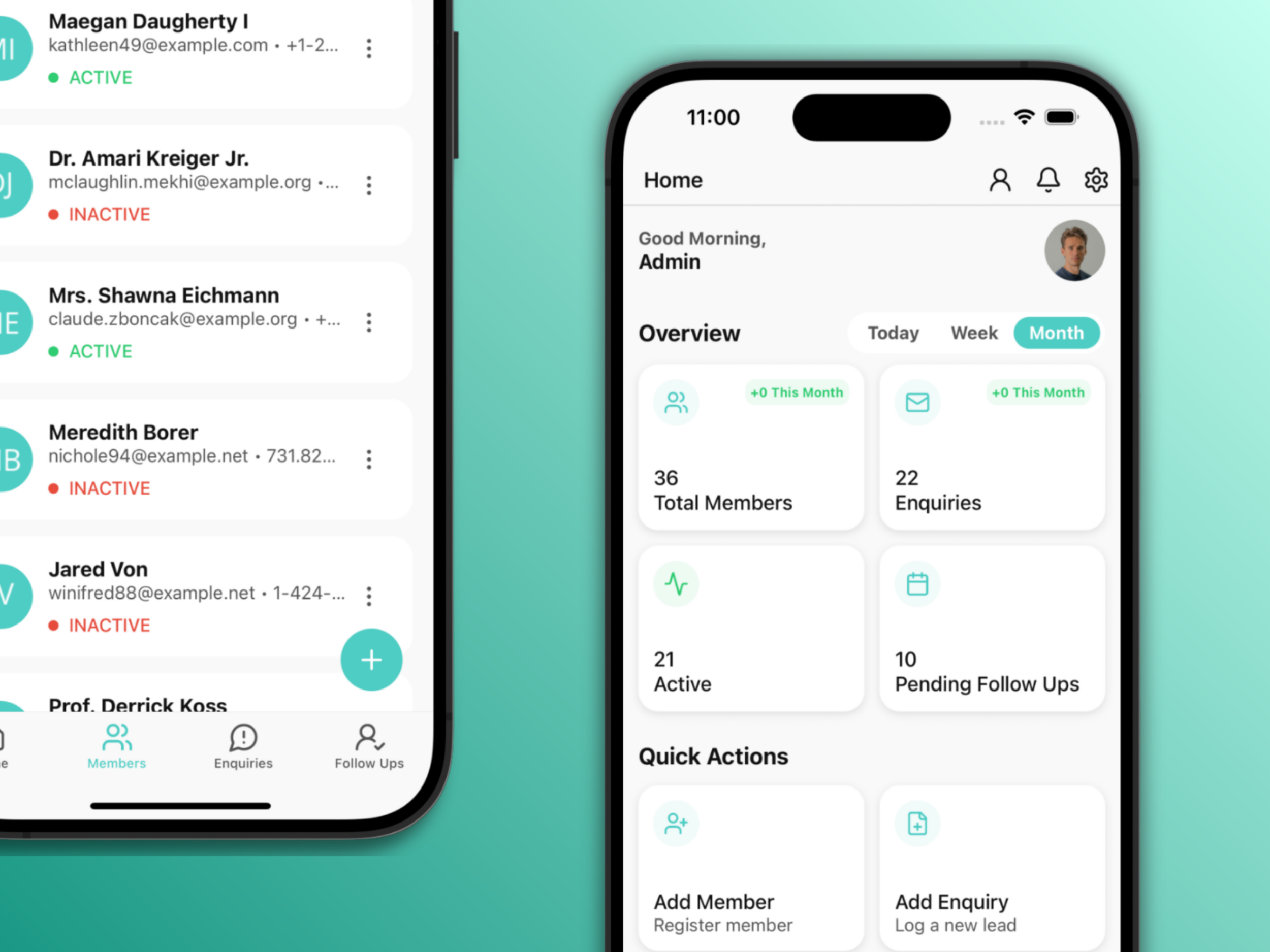
Our work on Gymie Mobile was driven by a simple question: how do we make decisions today that won’t limit us tomorrow?
As we explored various React Native component libraries, we noticed a recurring trade-off. Many worked well out of the box, but either had a limited scope or were difficult to extend. While that’s fine for short-term needs, thinking about Gymie as a long-term product made us cautious about locking ourselves into choices that would be hard to evolve later.
So we took a different approach. Instead of leaning heavily on a third-party library, we began building our own React Native component library, shaped around a lightweight and intentional design system. The aim isn’t to rebuild everything from scratch, but to give ourselves greater control so the UI can adapt, extend, and grow alongside the product.
We started with the fundamentals: shared design tokens, base components, and core interaction patterns. It’s quiet groundwork, but it creates a strong foundation, helping Gymie stay consistent today while remaining flexible and easier to evolve in the future.
Exploring Better Ways to Kick-Start Ideas
As part of our continued focus on using automation and AI in our day-to-day work, we’ve been looking for ways to help the development team move from ideas to proof-of-concepts faster and with less friction.
Our developers were already using different AI tools for different use cases. To build on that, we began exploring and comparing tools, especially those focused on code generation and early-stage development, to understand where they add real value.
With this mindset, we spent time exploring Google Antigravity. The goal wasn’t to adopt yet another tool, but to understand how ideas can move from an initial thought to something clear, testable, and shareable without heavy setup or long explanations.
A few aspects stood out as immediately useful in practice:
- Live previews that made progress easy to follow as ideas took shape
- Early testing to validate direction before things went too far
- Documentation that formed alongside the work, instead of being written later
- Short recordings that helped preserve context as work moved forward
Together, these made the early phase of development feel lighter and more fluid. Ideas didn’t need to be fully formed upfront; they could move forward, be shared early, and refined collaboratively.
Today, the team actively uses a mix of tools, including OpenAI Codex, Claude Code, GitHub Copilot, Google Anti-Gravity, and OpenCode. We’re still experimenting to find the right balance and working toward adopting AI-assisted development in a more structured and intentional way.