

A few things we worked on, learned from and shipped over the past month.
BlaBlaBlocks Popup
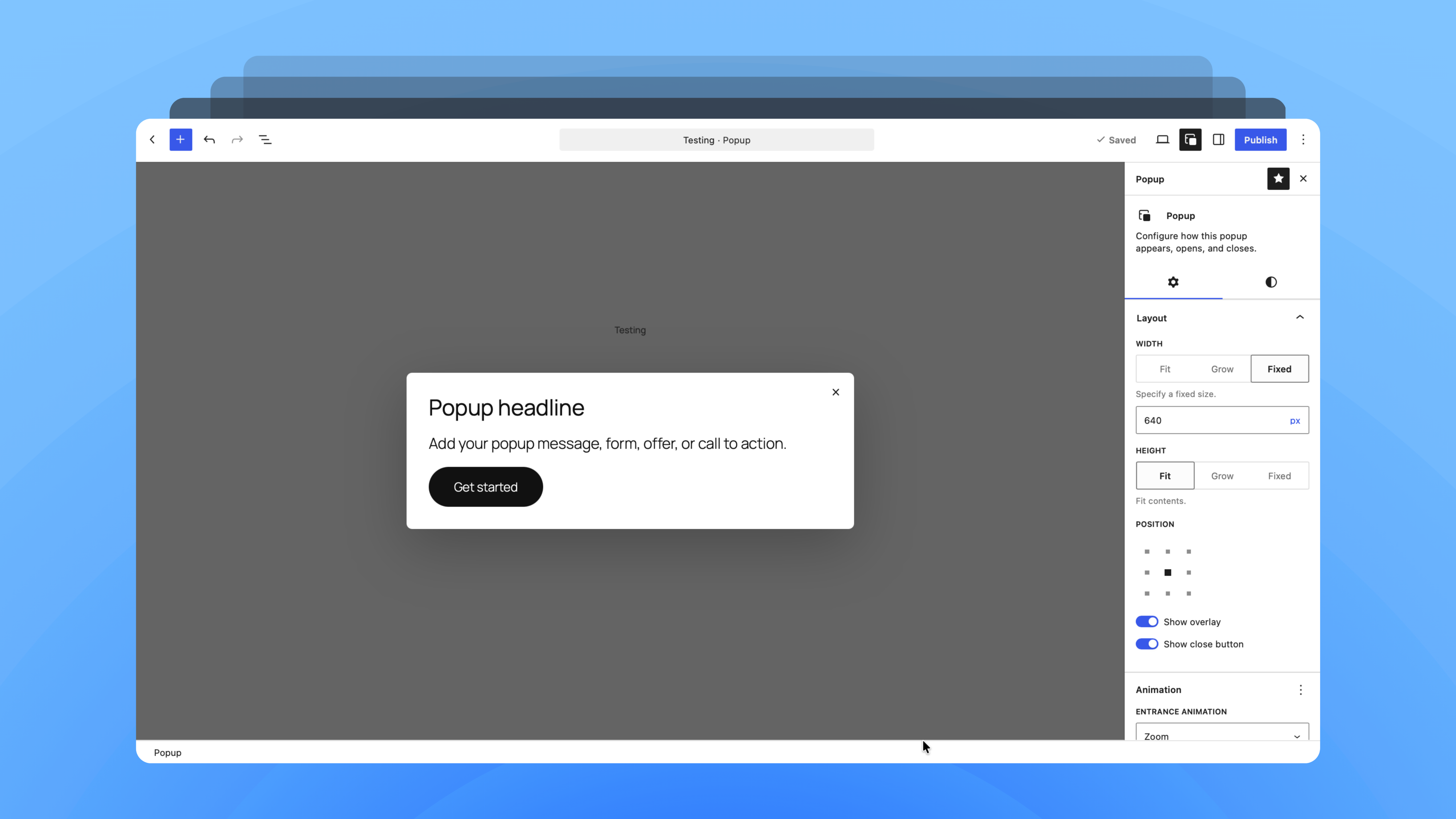
For nearly two years, we have been building and maintaining blocks for our own projects and client work, with one goal: making the WordPress editing experience more flexible and friction-free for content and marketing teams. We have built blocks for sliders and carousels, tabs and richer content formatting. This month, we added another piece BlaBlaBlocks Popup.
It lets teams build modals, popups and floating content directly with the WordPress Block Editor, without introducing another visual builder or editing workflow. The initial version is now available on WordPress.org, with the source code open on GitHub.
The bigger idea is simple: keep extending the Block Editor where real projects expose gaps, while keeping the experience familiar for the people publishing content.
From Custom CMS to WordPress
There is no shortage of “WordPress is dead” or “you don’t need a CMS anymore” conversations. What we see in projects is more nuanced.
AI can generate content and code, and developers can build increasingly capable systems without a traditional CMS. But businesses still have content teams, marketing workflows, approvals and publishing processes. People still need to make changes without calling a developer every time.
That is where a CMS still matters. We are working with new clients who are starting with WordPress, while others are moving away from custom-built or static websites towards it. For us, the question isn’t whether WordPress or custom systems are “dead”. It is whether the technology fits the people and processes operating the business.
Frappe Playground
We built Frappe Playground for a simple reason: you shouldn’t need to install a full environment or create an account just to explore what Frappe can do. It gives our team and clients a quick way to experiment with Frappe and selected apps, particularly CRM and ERPNext.
Playground is already helping us introduce people to Frappe and support learning and training. This month, we tightened the codebase, improved loading performance and refined the overall experience. We have more integrations and improvements in the works, and are looking forward to shipping them.
ERPNext Rescue Projects
For years, we have worked with businesses and individuals who inherited systems from previous vendors, poorly implemented projects or solutions that had become difficult to maintain. We have done this across WordPress, React and Laravel. Now we are seeing the same kind of work emerge around Frappe and ERPNext.
We are currently helping businesses migrate to ERPNext as well as rescue existing Frappe implementations. The interesting part is what we are finding along the way. These projects are giving us a closer look at where implementations become difficult, what gets overlooked and what it takes to bring an existing system back to a workable state.
The work is still underway, so there is more to learn before we conclude. We plan to share those findings, along with tools and practical guides, as the work develops.
What We’re Learning and Applying
Each month, we take a step back and look at what’s happening around the industry and ecosystem, picking a few ideas and tools that we can learn from and bring into our own work.
A few things stood out this month:
- WooCommerce introduced Purple, its official open-source block theme built around patterns, global styles and block-based store experiences. What caught our attention is that the work behind Purple is also improving WooCommerce itself, rather than adding another heavy theme layer. It reinforces an approach we already prefer: start with native WordPress capabilities, keep the foundation lean, and add custom functionality only where the project genuinely needs it.
- With new releases from OpenAI and Anthropic, the differences between models are becoming more meaningful. Some are better suited to deep reasoning and complex development work, while others are better for speed, repetitive tasks or cost-sensitive workloads. We’re becoming more deliberate about matching the model to the job rather than defaulting to the most capable model every time.
- Laravel MCP 1.0, WordPress Playground’s WebMCP experiments, and WooCommerce’s work around commerce agents all point in the same direction: AI is moving beyond chat and becoming capable of interacting with real applications through defined tools and permissions.What interests us is the control this creates. Instead of giving an agent broad access to an application, we can define what it can read, which actions it can perform, and where human approval is required. We’re exploring this approach across internal tools, development workflows and other areas where AI can assist without taking over the application.
- Laravel 14 and the upcoming PHP 8.6 release bring another round of framework and language improvements. We’re watching these with future upgrades in mind, particularly dependency compatibility, minimum PHP requirements and features that could simplify existing code.We don’t upgrade simply to stay on the latest version. We first look at what materially improves the application, then adopt it when the surrounding ecosystem and dependencies are ready.