
Where Our WordPress.com Bet Led Us

This month, WordPress.com shared our story. It brought us back to a belief we held early on.
While many agencies were leaning into more tools, more layers, and more complexity, we made a different bet to simplify. To go deep on one platform instead of spreading across many. WordPress.com wasn’t the obvious choice at the time. But it was evolving, and we believed in where it was heading. So we leaned in.
We shared feedback consistently, and often. Over time, that dialogue shaped not just the platform, but the way we work.That early bet has compounded. Today, most of our client sites run on WordPress.com. We move faster, deal with fewer operational issues, and spend more time focused on outcomes rather than upkeep.
This feature is simply a reflection of that journey. A reminder that what looks like a small, conviction-led decision at the start can quietly define everything that follows. We’re continuing to build with the same belief.
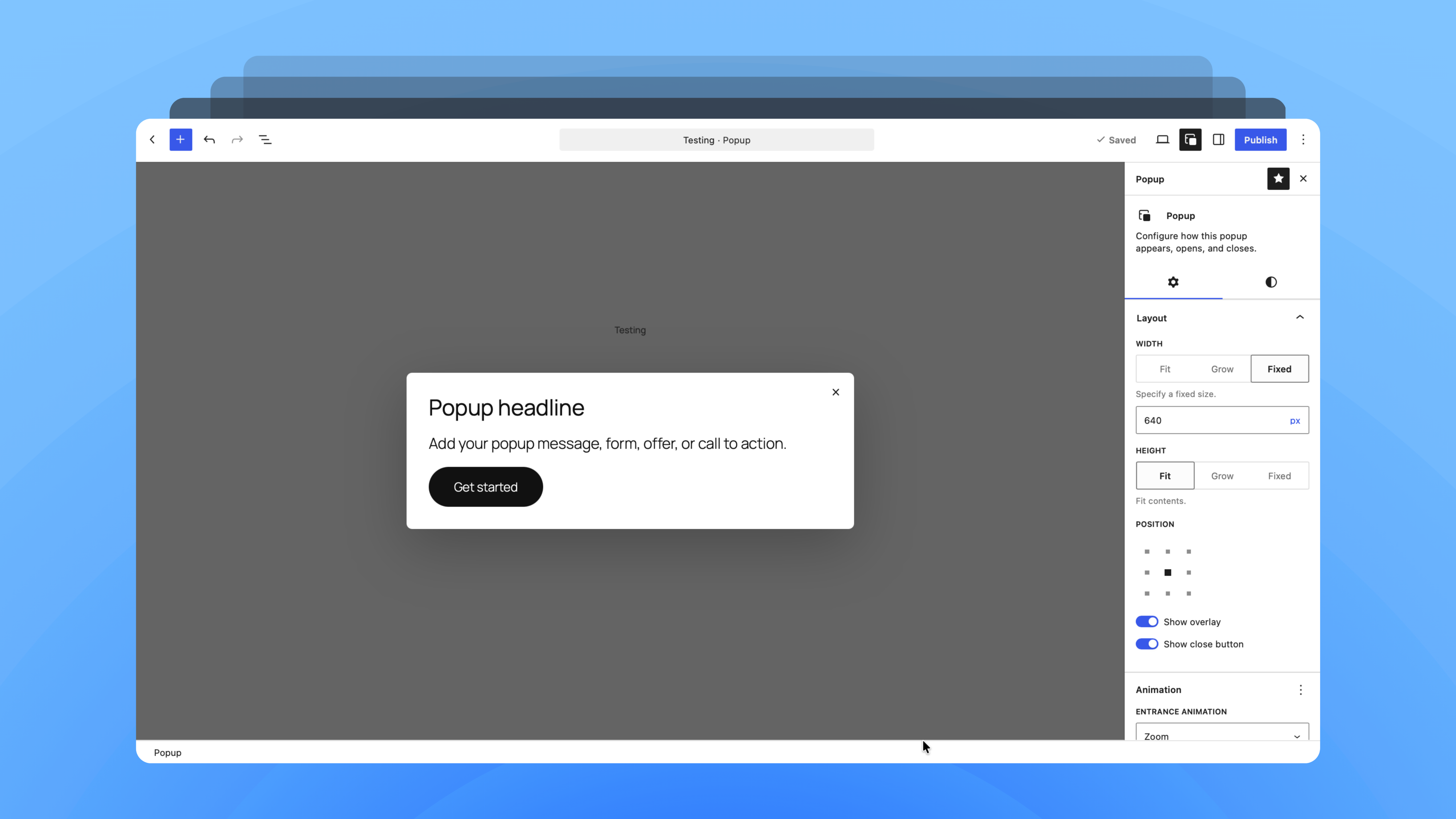
Bringing Core Query Loop to Slider Block
In our last update, we shared that we were working on bringing Core Query Loop integration to the Slider Block. The idea behind it was simple: let WordPress take care of the content, while our block takes care of the movement.
Since then, we’ve spent the last few weeks refining the details that make a feature feel seamless. Above all, we wanted it to feel natural to use, rather than something added on later.
Here’s where things stand today: we’re excited to see everything coming together, especially as posts and testimonials now flow seamlessly into the slider automatically without extra code or complicated setup. At the same time, we’re thoroughly testing the feature across different layouts, use cases, and edge cases to ensure it feels stable, intuitive, and dependable in real-world scenarios. We’re also in the final stretch now, focused on fine-tuning and polishing the experience so that when it reaches you, it feels solid, thoughtful, and ready to use.
More to come soon.
Where Gymie Is Headed Next
As we rolled out Gymie V3 in a close beta with a small group of existing users, we spent a lot of time listening working closely with gym owners, managers, and their teams as they used it in their day-to-day operations.
Those conversations shaped everything that followed.
Pretty quickly, a pattern emerged. What people needed wasn’t more features it was clarity. A system that feels intuitive, easy to move through, and dependable during the busiest parts of their day.
That learning guided where we focused next.
One area we focused on was visibility. We set out to improve the dashboard experience so gym owners could get a clearer overview of what is happening in their gym without needing to move between different sections. Active memberships, upcoming renewals, and daily check-ins are now brought together in one place, making the everyday experience in Gymie feel simpler and more practical.
The second area was language support.This came straight from conversations with gyms that wanted to use Gymie in their own language. And honestly, it made a lot of sense to us. When your team works in a platform every day, language should not feel like an obstacle. It should feel familiar and intuitive. So we started introducing translations step by step. Right now, Gymie is available in English, French, and Arabic, and we plan to keep adding more languages over time.
For us, this is about more than a dashboard improvement or a translation update. It reflects a bigger shift in how Gymie should feel clearer for gym owners, easier for teams, and better prepared for gyms in different parts of the world.
More Than a Number
Over a two-week stretch this month, our BlablaBlocks Tabs Block plugin grew from 100+ to 400+ active installs. This wasn’t accidental. The plugin was featured on the WordPress.org plugin directory as part of their rotating highlights bringing a wave of new visibility.
But what stayed with us wasn’t just the spike. Seeing 300+ new installs come in so quickly felt quietly meaningful. A reminder that when something is built with care and intention, it eventually finds its people sometimes gradually, sometimes all at once.
We’re continuing to refine and build, with the same focus we started with.
Maintenance: Refining FOSS projects
Last month focused on meaningful maintenance across our FOSS projects, with an emphasis on improving developer workflows, fixing edge cases, and strengthening overall reliability.
Tabs Block
For the Tabs block (v1.1.3), updates spanned both developer experience and frontend stability. We addressed important issues such as tab label output sanitization and improved handling of gap CSS values, resolving layout inconsistencies. We also added a local development playground script to simplify testing and iteration during development.
Laravel Decomposer
Laravel Decomposer (v1.4) saw a mix of functional improvements and structural fixes. We added support for excluding specific folders via configuration, along with visibility into currently installed package versions, making dependency analysis more practical. Key fixes included resolving PSR-0 autoloading issues for controllers and normalizing controller path casing to avoid inconsistencies across environments. We also updated Laravel version compatibility and cleaned up project structure by removing manual changelog management and refining package metadata.
Tatva
For Tatva (v1.0.2), the focus was on improving the development and release pipeline. We upgraded to Storybook v10, updated dependencies, and modernized the Node.js environment. A GitHub Actions workflow was introduced and refined for automated npm publishing, including OIDC-based authentication and streamlined release steps, making the package distribution process more secure and efficient.
What We’re Learning and Applying
A few things from around the web that caught our attention this month and felt worth applying to our own products and tools :
- Laravel 13 was released this month, with support for PHP 8.3 to 8.5. We also saw Laravel move further into AI-focused development, with updates around the AI SDK, multi-agent workflows, Laravel Cloud CLI, autoscaling, and managed databases in Forge.
- One of the most exciting updates from WordPress was the news that real-time collaboration is coming to WordPress 7.0. There were also a few other interesting updates this month, including AI provider packages in the plugin directory, in-editor visual revisions, new WP-CLI commands, and phpMyAdmin support in the wp-env Playground runtime.
- WordPress Studio also introduced new debugging tools this month, including Xdebug support, easier access to debug logs, and in-browser PHP errors. It’s a useful step toward making local WordPress development smoother and more practical.
- OpenAI launched GPT-5.4 on March 5 in ChatGPT, the API, and Codex, with a strong focus on coding, work, and agent-style use cases. They also introduced GPT-5.4 mini and GPT-5.4 nano, smaller and faster versions built for tool use, coding, and high-volume workloads.