

Munim is our internal invoice and estimate management system, used to manage clients, track billing activity, and keep an overview of important business metrics. We originally built it as a custom WordPress plugin. That gave us a fast way to get the system running and served us well for years.
As the application grew, however, its data relationships, workflows, and interface became increasingly difficult to fit into WordPress’s publishing-oriented architecture. We migrated Munim to Laravel and Filament PHP, creating a cleaner application architecture, a more purpose-built interface, and a stronger foundation for future integrations and development.

Business Context
Munim started as a simple internal requirement: manage invoices, estimates, clients, and related business information without depending on a third-party SaaS product.
WordPress was a practical starting point. Custom post types and metadata allowed us to move quickly, the administration interface gave us much of the backend infrastructure we needed, and the team was already deeply familiar with the platform.
For a relatively simple internal tool, that trade-off worked well. But Munim did not remain simple. Over time, the volume of records increased, relationships between different types of data became more important, and the system began supporting workflows that looked much more like a business application than a publishing system. The technology that helped us move quickly at the beginning was gradually becoming a constraint.
The Challenge: When a WordPress Plugin Starts Becoming an Application
The issue was not that WordPress had stopped working. It was that Munim’s requirements were moving further away from the problems WordPress is primarily designed to solve. Three areas made that increasingly apparent.
01.
Relational Data Was Becoming Harder to Manage
Munim initially stored invoices, estimates, clients, and related information using WordPress custom post types and metadata. That approach was flexible while the application was relatively small, but it became more cumbersome as relationships between records grew.
WordPress can support custom database tables, but doing so would have required introducing additional infrastructure around querying, relationships, and application-level data management. At that point, we would effectively have been building an application framework around WordPress rather than working with the platform’s strengths.
02.
Development Was Becoming More Expensive
As Munim expanded, adding features meant working around decisions made when the application was much simpler. Business logic, WordPress hooks, custom fields, metaboxes, and administrative screens had become increasingly interconnected.
Every new feature carried more development overhead and increased the risk of introducing regressions. We wanted a foundation where application logic and data relationships could be expressed more directly.
03.
The Interface Still Felt Like WordPress
The biggest usability limitation was structural. Invoices and estimates are not posts, and clients are not editorial content. Although custom metaboxes and administration screens allowed us to adapt WordPress considerably, the experience still inherited patterns designed around publishing. Munim had evolved into an operational application, but its interface still carried the shape of a CMS.
The Solution: Rebuild Around Laravel and Filament
Rather than continue adapting WordPress around increasingly application-specific requirements, we decided to rebuild Munim using Laravel.
Laravel gave us a stronger foundation for modelling business data, defining relationships, structuring application logic, and integrating Munim with other internal systems.
We paired it with Filament PHP for the administration interface. Filament gave us many of the conveniences that originally made WordPress attractive forms, tables, filters, dashboards, actions, and administrative tooling—but within an architecture designed specifically for Laravel applications.
The migration therefore was not simply a technology swap. It allowed us to rethink Munim around the workflows it had grown into.
01.
A Purpose-Built Application Interface
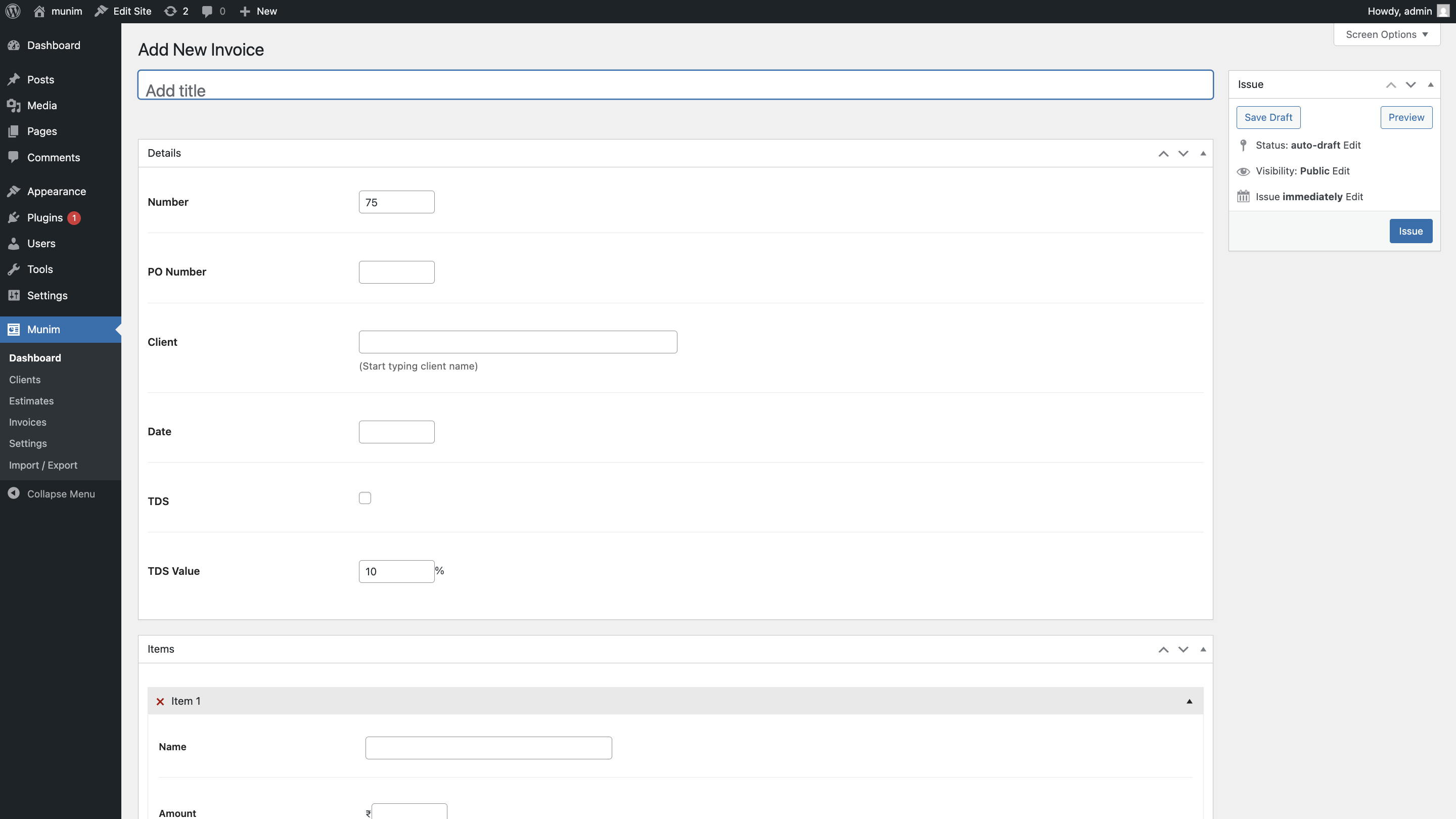
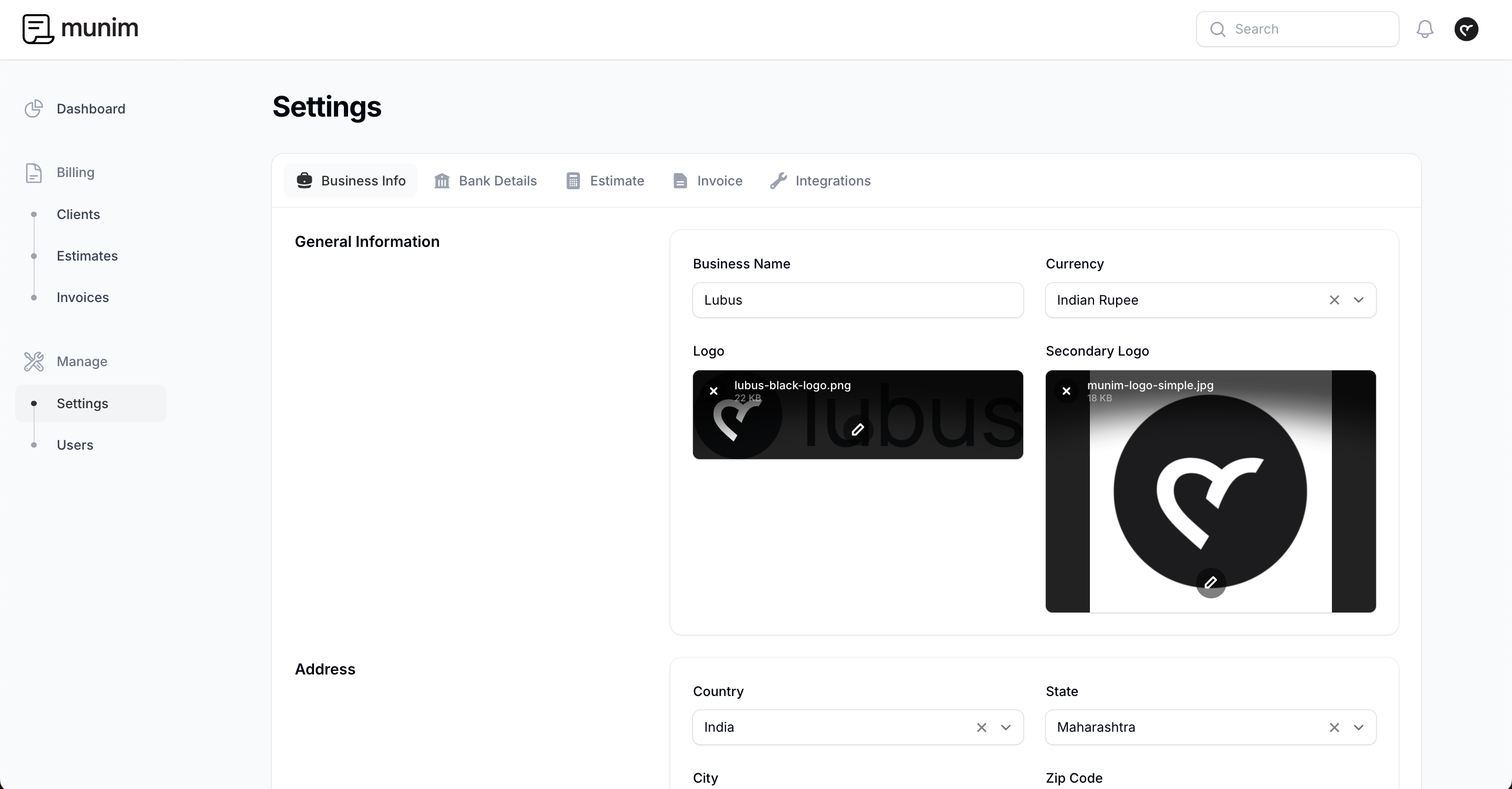
The new Munim experience was redesigned around invoices, estimates, clients, and business operations rather than adapting those workflows to WordPress administration screens.
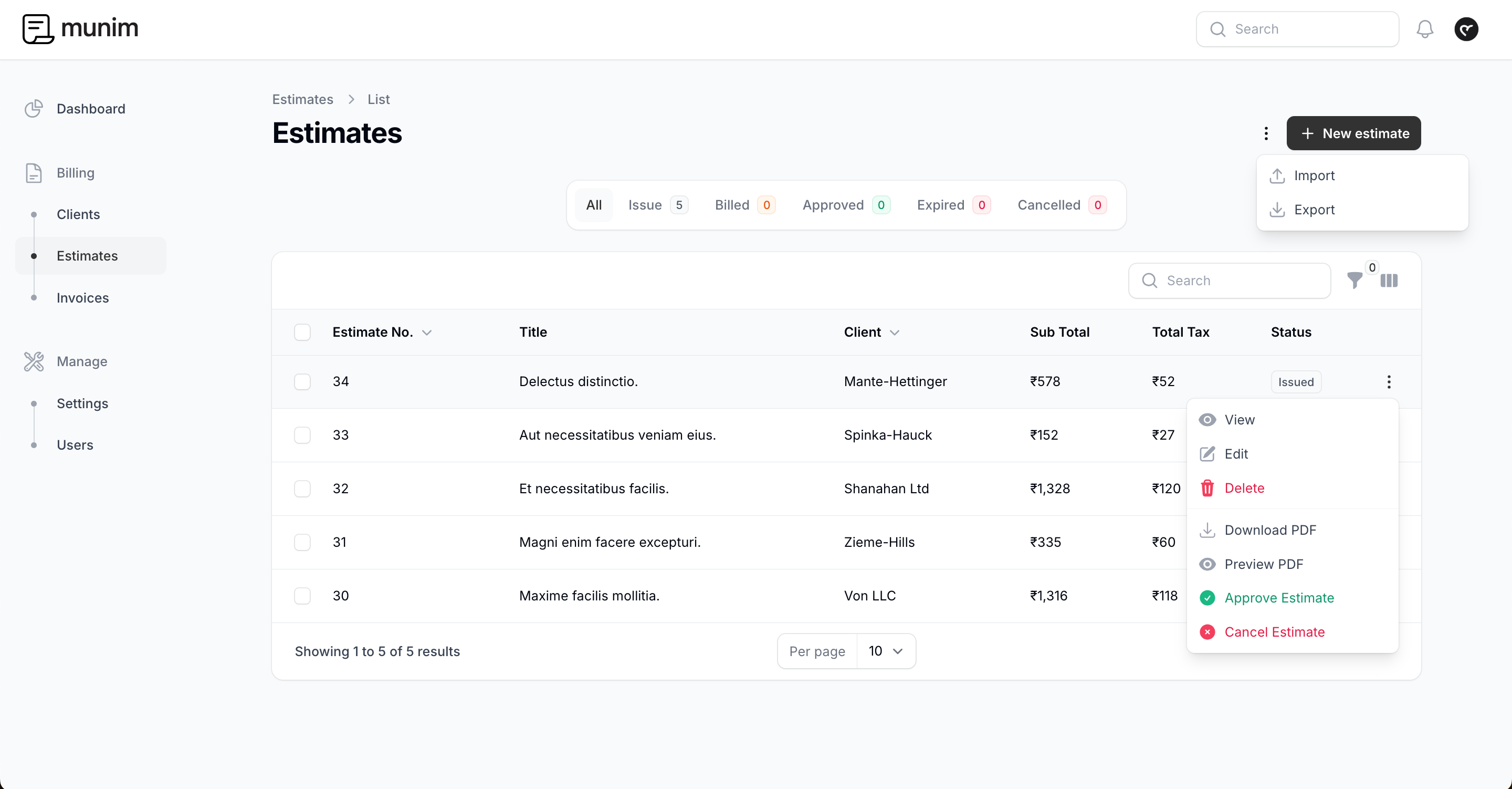
Filament resources gave us structured interfaces for viewing, creating, editing, filtering, and managing records. Common actions now feel like part of a dedicated business application rather than extensions of a publishing interface.
The older WordPress version relied heavily on familiar post-editing patterns, while the Filament application presents invoices and settings around the task itself.
02.
Cleaner Invoice and Estimate Workflows
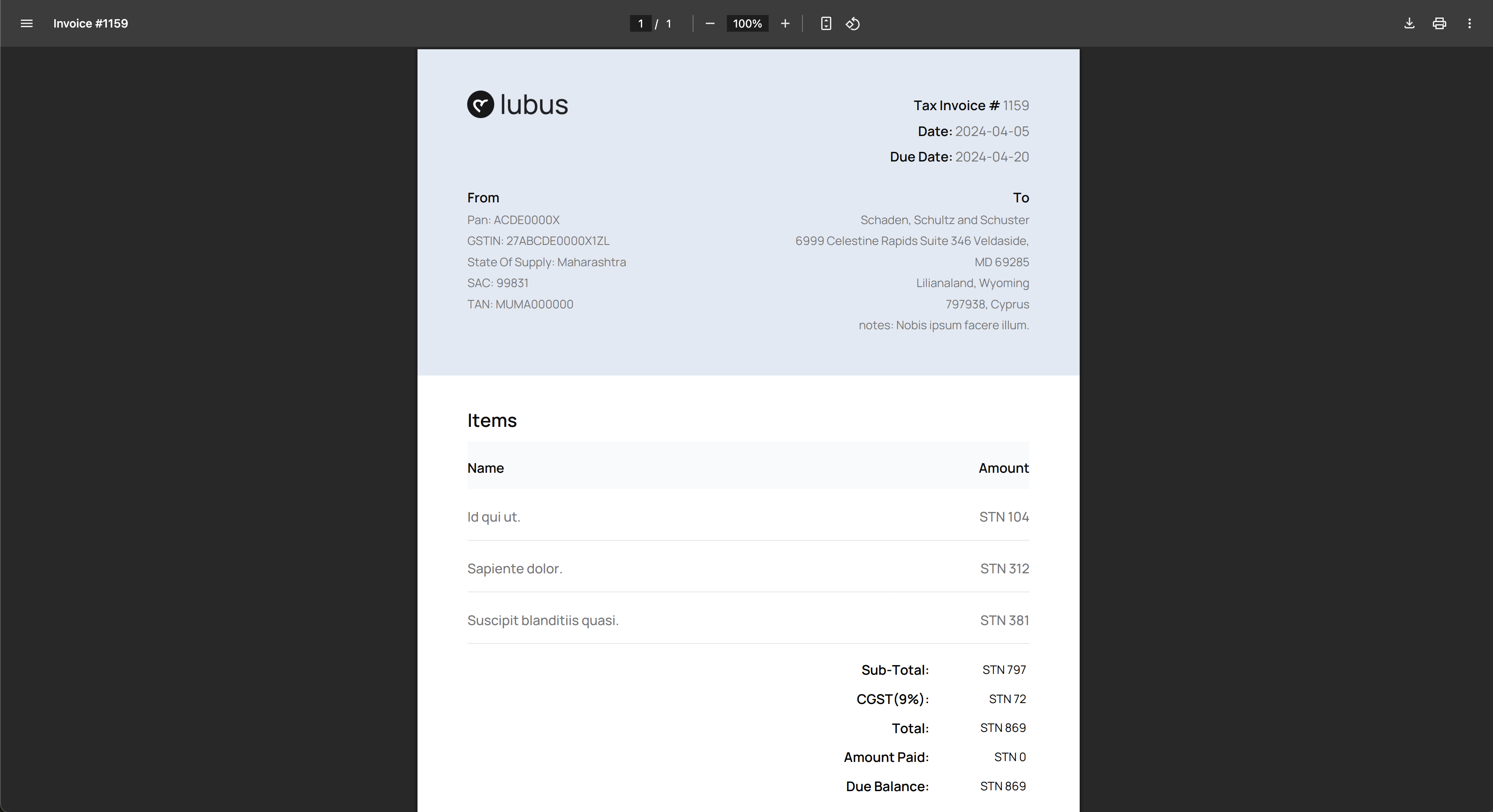
Invoice and estimate creation were redesigned to reduce friction around everyday tasks. Fields, line items, client information, totals, and related actions are presented as part of one focused workflow.
This made the application easier to use while also giving us greater freedom to evolve those workflows as our own processes change.
03.
Better Business Visibility
Filament’s dashboard and widget system allowed us to surface important business statistics more effectively.
Instead of treating reporting as an additional layer within WordPress, metrics became a first-class part of the application.
The dashboard now provides a clearer overview of Munim activity while requiring considerably less custom administrative boilerplate to maintain.
04.
Faster Navigation with Global Search
We introduced global search across important records such as clients, invoices, and estimates.
For an application used regularly throughout the day, small workflow improvements like this have a meaningful impact.
Instead of navigating through multiple administrative screens, the team can move directly to the record they need.
05.
Import, Export, and Data Portability
The Laravel version also introduced cleaner import and export workflows. This makes it easier to move data into and out of the application for reporting, backups, and operational requirements.
Data portability is now treated as an application capability rather than something layered onto individual WordPress content types.
06.
Migrating Existing Business Data
Rebuilding Munim did not mean starting again. We migrated the existing invoices, estimates, clients, and related information from the WordPress implementation into the new Laravel data model.
Preserving that history was essential because Munim had already accumulated years of operational data. The migration allowed the team to move to the new system without losing continuity.


Operational Impact
The biggest improvement is that Munim now fits the problem it is solving. The interface is centred around business workflows rather than publishing concepts. Data relationships are easier to model and reason about. New functionality can be added without working through layers of WordPress-specific abstractions.
The application also gives us more freedom to connect Munim with our broader internal systems, including our ERP and other operational tooling. For the development team, Laravel provides a clearer architecture for application logic, while Filament significantly reduces the amount of repetitive administration UI we need to build and maintain.
For the people using Munim every day, the difference is simpler: the system feels like an application built specifically for the job.

What This Means for Growing Internal Tools
Starting with WordPress was not a mistake. It allowed us to build Munim quickly, validate what we actually needed, and operate the system successfully for years without investing in a larger application architecture too early.
The problem only emerged as the requirements changed. This is an important distinction when evaluating legacy systems. A platform can be the right choice at one stage of a product’s life and become less suitable later. The question is not whether one framework is universally better than another, but whether the architecture still matches the problem being solved.
In Munim’s case, the system had evolved from a relatively simple administrative tool into a relational business application. That was the point where Laravel became the better fit.
The Final Takeaway
Munim began as a custom WordPress plugin because WordPress gave us exactly what we needed at the time: speed, flexibility, and a familiar administrative foundation.
As the system matured, its requirements shifted toward richer data relationships, application-specific workflows, deeper integrations, and a more specialised user experience.
Migrating to Laravel and Filament gave us a foundation better aligned with that next stage. The lesson was not to choose Laravel over WordPress. It was to recognise when the nature of the problem had changed and choose the right tool for what the product had become.
Looking to automate your workflow or migrate your legacy system to a modern application that allows you to focus on optimizing your business? Schedule a call with us to explore how our team can assist you with a customized solution tailored to your unique needs.